

Why do dogs lick? The science of self-soothing
Written by Team LickBloomYou're two minutes into a video call when it starts: the high-pitched whine, right on cue, every single time. Your dog isn't trying to sabotage your career. They're telling you, in the only language they have, that something about this moment feels unsettled. And if you've ever watched that same dog lick their paw, the floor, or your hand afterwards, you've already seen their built-in coping mechanism at work.
Licking is one of the most normal things a dog does. It's also one of the most useful, if you understand what it's for.
Quick answer: dogs lick to self-soothe. The repetitive motion is calming in the same way chewing or grooming is, and it's linked to the release of feel-good chemicals in the brain. A bit of licking, of themselves, you, or their surroundings, is completely normal. Sudden, excessive, or focused licking (especially on one spot) is worth a chat with your vet, since it can sometimes point to pain, allergies, or anxiety.
What's actually happening when your dog licks
Licking starts early. Puppies lick their mother and littermates from their very first days, and that early link between licking and comfort doesn't go away. Many vets and trainers describe licking as a dog's version of a deep breath: a repetitive, low-effort action that helps the body shift out of "alert" mode and into "settle" mode.
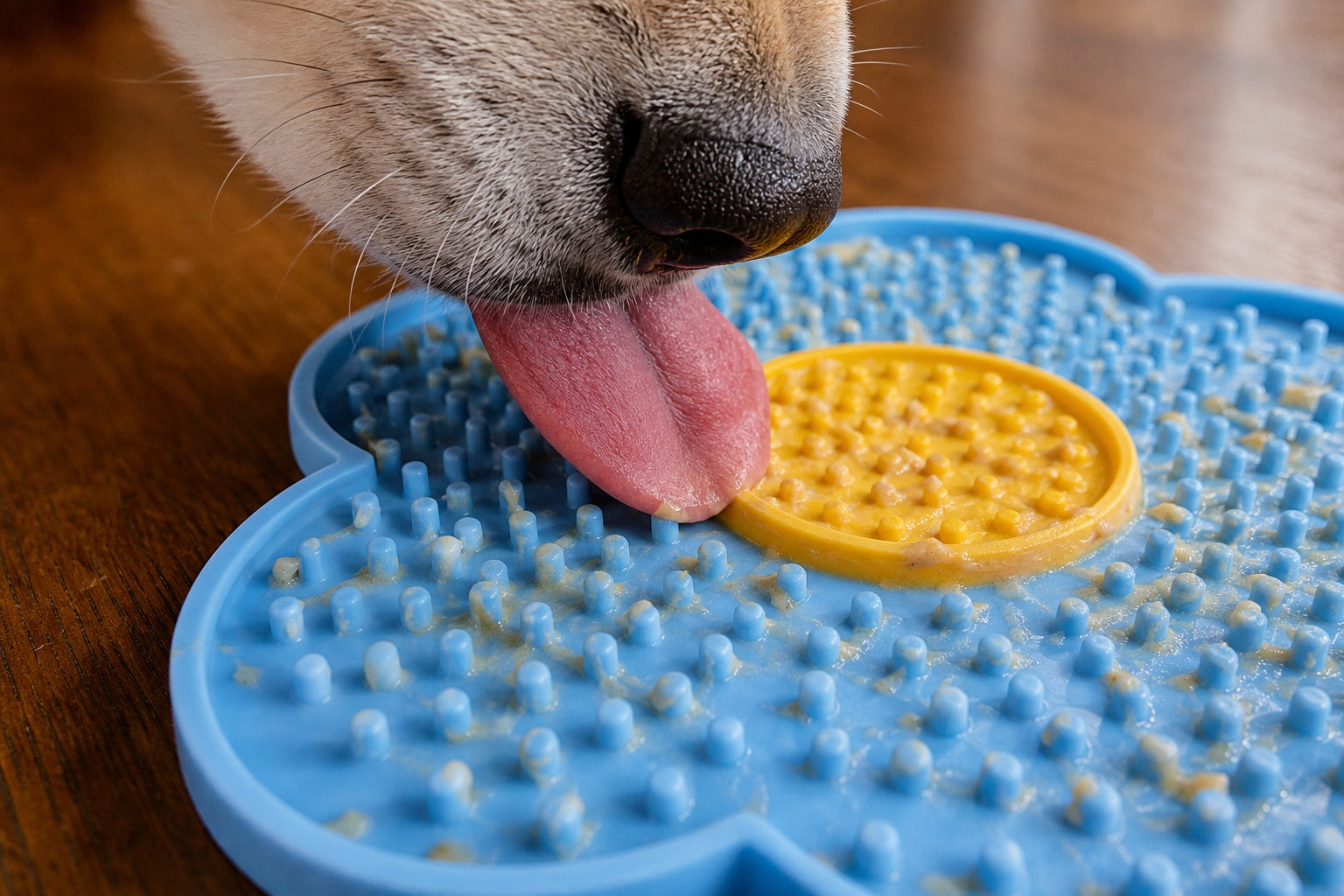
That's the whole idea behind a lick mat. It doesn't teach your dog anything new. It just gives an already-calming behaviour somewhere good to go, with texture zones designed to make a single session last longer.
Normal licking vs licking that needs a vet's eye
Most licking is nothing to worry about. A dog who licks their paws after a walk, greets you with a few licks, or settles in with a lick mat before you leave the house is doing completely normal dog things.
It's worth paying closer attention if you notice:
- Licking that's sudden, intense, or focused on one spot (a paw, a flank, a joint)
- Licking that leaves the skin red, raw, or bald in patches
- Licking that seems to ramp up regardless of what's going on around your dog
- Licking paired with other changes, like appetite, energy, or sleep
Any of those are a good reason to see your vet. Skin issues, allergies, joint pain, and gut discomfort can all show up as extra licking, and a vet can rule those out properly. LickBloom supports calm routines, it isn't a substitute for veterinary or behavioural care.
The everyday moments dogs lick the most
Once you start noticing, you'll see licking everywhere. A few of the most common triggers:
- After a walk — paws get a once-over, partly grooming, partly winding down.
- When you're about to leave — some dogs lick themselves, the floor, or furniture as the signs of "leaving" stack up.
- During meals — that determined bowl-licking after every last crumb is gone.
- At the vet or groomer — licking lips and noses is a classic "I'd rather be anywhere else" signal.
- During storms or fireworks — alongside pacing and hiding, licking is a common stress response.
- While you eat — partly hope, partly habit, partly "that smells interesting."
None of these are problems on their own. They're just your dog's way of processing the moment, which is exactly why giving that instinct a job to do can help.
Giving the lick reflex somewhere good to go
You can't (and don't need to) train licking out of a dog. What you can do is set up moments where it's useful instead of, say, aimed at the leg of your dining table.
A lick mat works well right before the moments you already know are tricky:
- Ten minutes before you leave for work
- While you're in the shower or on a call
- During grooming, nail trims, or vet visits
- As the first rumbles of a storm or fireworks start
- Stuck to the inside of the bath during bath time
The LickBloom Lick Mat has four texture zones, ridges, nubs, pockets, and grooves, designed to stretch a session out to ten or twenty minutes (longer if frozen). For ideas on what to put on it, see 25 lick mat recipes your dog will lose it over.
Common mistakes when redirecting licking
- Punishing it. Telling a dog off for licking, especially anxious licking, usually adds stress rather than removing it.
- Ignoring sudden changes. A dog who starts licking one spot obsessively isn't being naughty. That's worth a vet visit, not a stern voice.
- Using anything from the never-feed list. Xylitol, chocolate, grapes, raisins, onion, garlic, alcohol, caffeine, and macadamias are all off-limits, on a lick mat or anywhere else.
- Inconsistent timing. A lick mat works best as part of a small, repeatable routine, the same few minutes before the same few triggers, so your dog learns what comes next.
Ready to give it somewhere to go?
The LickBloom Lick Mat turns a completely normal instinct into a ten-minute ritual: calmer dog, quieter house, one less whine on your next call. Food-grade silicone, dishwasher and freezer safe, with a suction base that holds on tile, glass, the tub, or the fridge door.
Not sure your dog will take to it? The 30-day Love-It-or-It's-Free guarantee means you're covered either way. Shop the LickBloom Lick Mat, and grab a few ideas from 25 lick mat recipes your dog will lose it over while you're there.
Frequently asked questions
Is it normal for my dog to lick everything?
A moderate amount of licking, themselves, you, the floor, their toys, is normal dog behaviour. It usually becomes worth a closer look only if it's sudden, excessive, or focused on one spot.
Why does my dog lick my face or hands?
It's often a mix of affection, greeting behaviour left over from puppyhood, and curiosity about whatever you last touched or ate.
Can licking be a sign of anxiety?
Yes, it can be one of several signs, often alongside pacing, panting, or hiding. If it lines up with specific triggers like being left alone or loud noises, a calm-down routine, including a lick mat, can help.
How do I gently redirect excessive licking?
Offer a lick mat or another appropriate outlet at the moments licking tends to ramp up, and talk to your vet if it's sudden, intense, or focused on one area, since that can point to a medical cause.
Are lick mats good for dogs?
For most dogs, yes. They give a natural self-soothing behaviour a structured outlet, can slow down fast eaters, and add a bit of enrichment to an otherwise quiet moment. As always, supervise the first few sessions and stick to dog-safe fillings.


